November 19th, 2008

Should You Advertise Online?

After much procrastination, I just published my first post at K Street Cafe, a blog “where experts from a variety of backgrounds share new and novel ways technology, the Internet and social media are being used to shape public policies.” Many thanks to the Adfero Group for devoting its stellar resources to the blog, and for allowing me to contribute. (My next post, inspired by Bill Beutler, will focus on the use and abuse of Wikipedia.)

In the continuing debate over new media vs. old media—what’s online vs. what’s offline—the sub-debate about advertising is instructive.

On one hand, online ads are vulnerable to the tyranny of choice. The metrics can be overwhelming, the jargon can be off-putting and success can be mistaken for failure. Moreover, unlike traditional ad buys, online campaigns demand continuous monitoring and fine-tuning.

On the other hand, if you’re tired of one-off shots in the dark—where your one-page spread for life insurance runs opposite to an article on video games, or your spot for an SUV runs in the middle of a segment on high gas prices—then online ads may be right for your organization. Here’s why:

1. Cost. Online ads are cheap—cheaper than their print and broadcast counterparts. Rather than pay for exposure, you pay only when your ad is actually clicked on.

2. Targeting. Online ads allow you to reach niche demographics. Rather than throwing your ad in front of a general audience, you can narrowly tailor your target search criteria.

3. Flexibility. Online ads can be changed on the fly. Rather than getting one chance to craft the perfect ad, you can optimize your creative as conditions warrant for maximum performance.

4. Measurement. Online ads come with reams of statistics. Rather than rely on word of mouth or voluntary disclosure to ascertain your ad’s success, you can get the unfiltered data first hand.

Okay, I’m sold, you say, but where do I begin? Which programs should I use? Since the Web’s sweet spot in its customizability, I tend to prefer do-it-yourself (DIY) platforms over fixed buys. Of the various DIY options, here are the two I consider to be the best (runners-up include LinkedIn and MySpace):

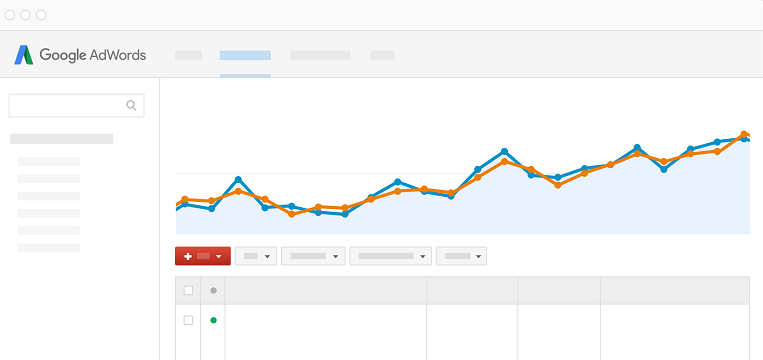
1. Google. As you might conjecture, Google offers not only the biggest audience but also the Internet’s most sophisticated ad program. Its ability to track “conversions”—that is, how many people who click on your ads go on to execute a desired action, like clicking a “donate” or “subscribe” button—is priceless.

The difficulty, however, lies in the learning curve to master Google’s algorithm, which penalizes ads whose copy does not painstakingly correspond with both the text of the Web page it is linked to and the search phrases for which it is configured to display. Compounding these challenges are decisions on whether to display your ads wherever Google ads appear or just on Google.com, and how much to bid on each search term. Happily, Google’s help files are excellent, and the company offers a toll-free phone number where staffers will answer your questions patiently and proficiently. In fact, given two weeks’ notice, Google will optimize your campaign for free.

Conclusion: Google ads can be as frustrating for beginners as it is potent for experts. If you’re willing to invest the time and have a place for advertising in your long-range plans, then go for it—you might just be the next Eric Frenchman.

2. Facebook. While some have criticized Facebook ads as a “failure” and lackluster, they offer unparalleled microtargeting in ways that would make Karl Rove salivate, and they couldn’t be easier to create, change, or evaluate. Want to reach single women in Seattle who are older than 21 and work at Microsoft? Go ahead—there are 160 of them on Facebook, and your ads will only appear in front of this demographic, thus ensuring that not a single set of eyeballs goes to waste.

The downside: Facebookers are predominantly young. Of the socnet’s 35.8 million users in the United States, 14.7 million are 21 or younger, and 27 million are 30 or younger.

Conclusion: For its simplicity and deep data, Facebook is both a beginner’s tool and a marketer’s dream.

To borrow a line from Tom Friedman, the Internet has flattened the field of advertising, pulling back the curtain on this one-time specialty and allowing us Web flacks to add another quiver to our advocacy arrow. We should do so not because the quiver is newfangled, but because it’s effective.


November 11th, 2008

How Would You Respond to This E-mail?

Hand on MouseIn the first week of my first job, my boss sent me the following e-mail:

“Jonathan: Please find out who voted for BCRA.”

My first instinct was to reply, “Hi Bill: So sorry about this, but I don’t know what BCRA is.” Fortunately, before clicking Send, I rethought my response and instead Googled “BCRA.” Ten seconds later, I found the answer: BCRA stood for the Bipartisan Campaign Reform Act, otherwise known as McCain-Feingold.

These differing responses represent the two types of employees. The first response, which foists the burden back onto the questioner, comes from the slothful employee, who wants to go about his job without exertion and who does not seek success. The second response, which embraces the burden, comes from the achiever. He may not know the answer—and even be utterly ignorant of the subject—but he takes it upon himself to learn. He is averse to answering a question with a question, and considers it a failure if he cannot do what is asked, even with limited information. (A third response, research without success, is fine, as long as the research is undertaken in good faith.)

In short, the slothful employee presents his boss with problems, whereas the achiever presents him with solutions. One is a problem; the other is a problem-solver.

Think about which person you are the next time you receive a request—and not just from a superior—which asks for something about which you’re ignorant. Instead of reaching for the Reply button, scroll a little farther for the search bar. You may surprise yourself.